
How Mother Baby Friendly Spaces Save Lives in Gaza
Below is Aliya’s story – one which is not an exception, but a reality for tens of thousands of mothers in Gaza who are raising their children while displaced, hungry, exhausted, and isolated from support systems that usually protect maternal and newborn health. In emergencies, survival depends not only on food, water, and shelter, but on creating spaces where caregivers can regain a sense of safety, knowledge, and confidence. That is the purpose of Action Against Hunger’s Mother Baby Friendly Spaces.
Aliya’s* Story – based on real testimony
*Name has been changed for personal safety and security reasons
In 2024, Aliya became pregnant in the midst of intense violence.
“I was carrying him for nine months,” she said with quiet certainty, pointing beneath her heart towards her stomach, “when we walked out of the south, back to our neighborhood in the north.”
For 15 hours, she walked. She walked past houses with their walls peeled open by airstrikes and bodies decomposing in their wreckage. There was no transportation, no food, no water. She whispered to herself, “Oh my god, I can’t reach.” And then she whispered again, “Aliya, you did not survive the bombs to die from hunger and thirst. You did not survive only to die from walking.”
***
In the days that followed, Aliya’s road gave way to labor, and her son was born by cesarean section in April 2025. But Basel was just hours old when he was sent home – Aliya's bed space was a coveted one in a Gaza City hospital overwhelmed by patients. “So, there I was, carrying him once more, but this time in my arms. I carried him from the hospital while the war raged on, and shooting overlooked our heads.”
Raising Basel under these conditions felt impossible. Their tent was flooded; rain had collected several inches across the floor. Basel’s first set of clothes were strips of cloth Aliya tied together. During the famine in the north, Basel lost so much weight that Aliya feared for his life. In a matter of months, Aliya’s life with Basel shrunk to one defined by a tent surrounded by sewage, garbage, and insects she had never seen before. Basel was the first child, she said, that she felt she had failed – not for lack of love, but because the circumstances of war were far too strong.
***
However, attending Action Against Hunger’s Mother Baby Friendly Space changed something in Aliya. It took one visit to a recently opened Mother Baby Friendly Space in Gaza City for her to understand its importance. “When I come here,” said Aliya. “I feel safe. I feel as though there is someone who cares about us and gives us their attention and time.” Now, when Aliya returns home from the Mother Baby Friendly Space, she finds herself able to play with her son. “These sessions give me the little strength that’s needed to continue.”
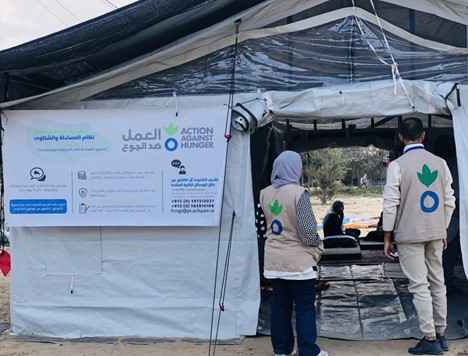
Action Against Hunger Mother Baby Friendly Space shelter. 27 November 2025. © Action Against Hunger
Aliya’s wish is simple: “I want safety for my children. A clean tent. Clothes for my baby. A place where my children won’t fall sick from the environment around them. I want my son to grow up to see a life better than this one – a life without violence, without the constant struggle to keep him alive, without hunger.”
Why Mother Baby Friendly Spaces matter
In crisis settings such as Gaza, infants and young children face the highest risk of illness, malnutrition, and developmental delays. At the same time, caregivers experience extreme stress, trauma, disrupted breastfeeding, and limited or obstructed access to health services – conditions which directly affect newborn survival and development. Mother Baby Friendly Spaces are designed to interrupt this cycle by providing safe, predictable environments where caregivers and babies can receive specialized support.
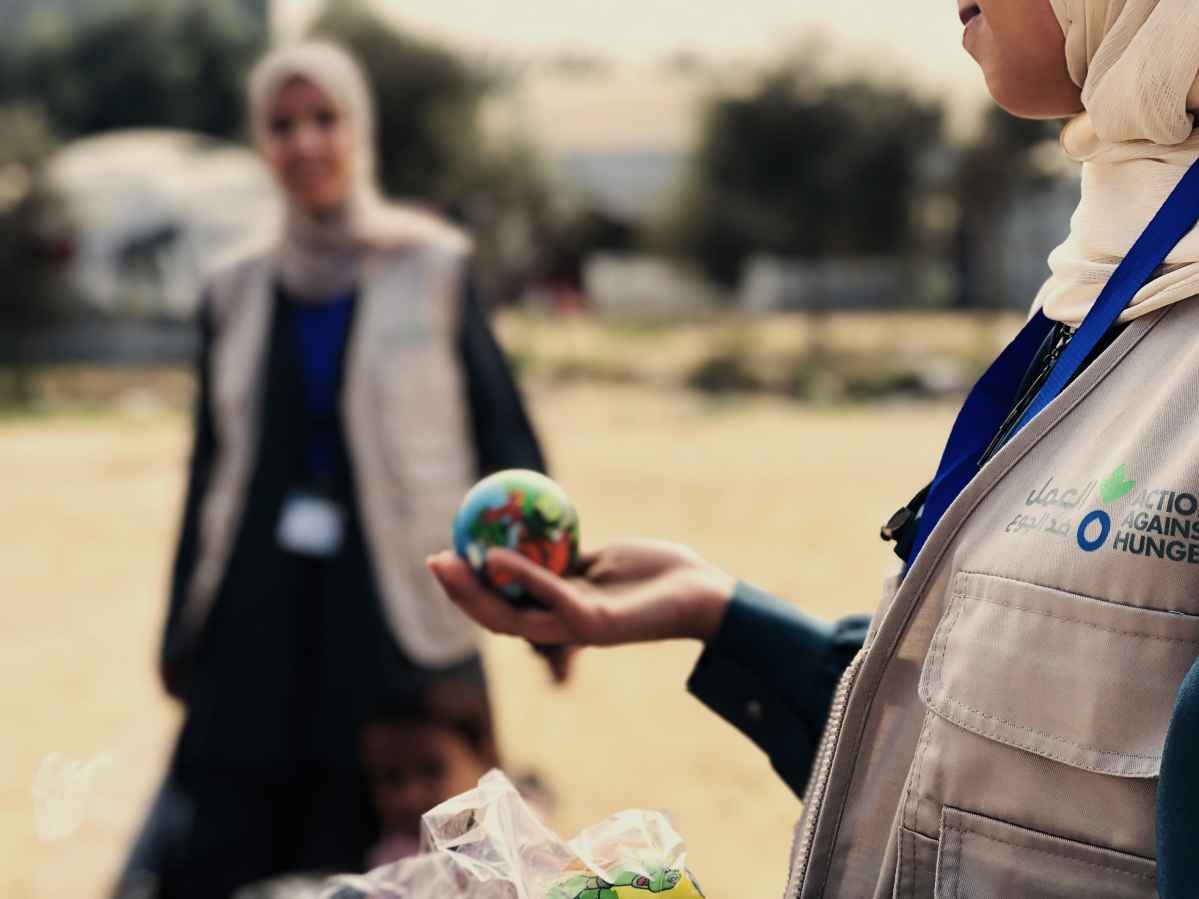
Action Against Hunger staff member holding a ball during child-friendly space sessions. 11 November 2025. © Action Against Hunger
“The needs of the women are numerous,” explained one of Action Against Hunger’s Nutrition Advisors in Gaza City. “We try as much as possible to provide what is needed – hygiene kits, psychosocial support sessions, child-friendly spaces. Many of the mothers are facing extremely difficult circumstances which we try to alleviate by ensuring the continuity of these services, particularly in the north were supplies are limited.”
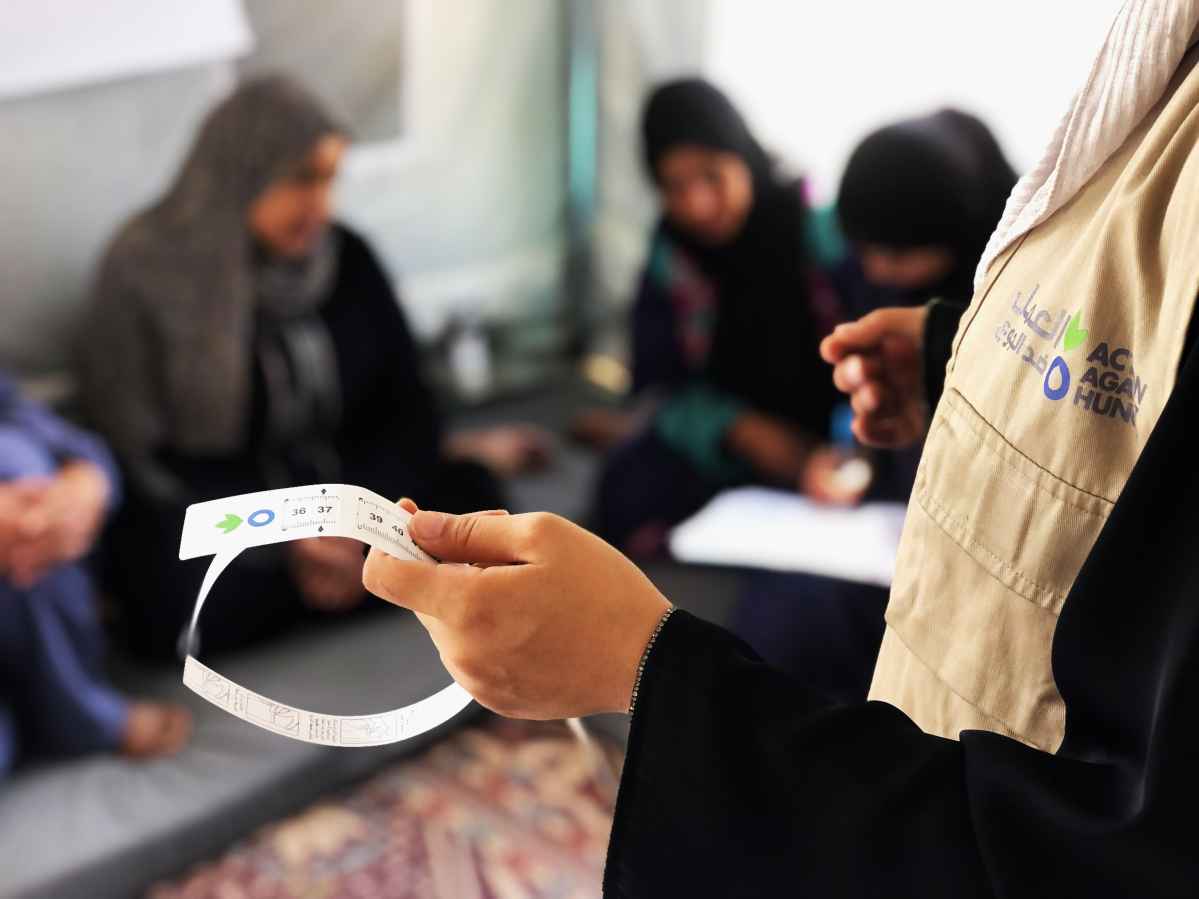
Action Against Hunger Nutrition Advisor explaining to mothers how to conduct mid-upper arm circumference tests. 1 December 2025. © Action Against Hunger
Improved infant feeding practices and nutrition
One-on-one counseling helps mothers breastfeed successfully in severe conditions. In Gaza, caregivers have extremely limited access to healthcare; they are often cut off from social networks, have limited access to information, and are unable to find privacy and the necessary routine to breastfeed when living in crowded, collective shelters. Mother Baby Friendly Spaces allow for both designated space and time for mothers to learn – and teach each other – practical techniques to increase milk production, practice safe complementary feeding, and prevent common nutrition risks in emergencies. Since the launch of Action Against Hunger’s Mother Baby Friendly Spaces in March 2025, our teams have reached nearly 10,000 mothers and caregivers with such support aimed at increasing rates of exclusive breastfeeding which is key to preventing and combatting malnutrition, ensuring health physical and cognitive growth, identifying early of acute malnutrition, and referring faster to treatment.
Reduced maternal stress and improved caregiver well-being
Peer-to-peer support sessions, group psychosocial support sessions, and awareness sessions help mothers cope with trauma and teach about the importance of psychological wellbeing of children. “The mothers and caregivers often tell us that they need more of these sessions because it gives them a break from the psychological pressure they face under violence and blockade,” said the Nutrition Advisor. A calmer, more supported caregiver directly impacts a child’s nutrition and development. Mothers report feeling “seen,” “valued,” and more confident in caring for their infants.
Trained Action Against Hunger staff monitor growth, screen for danger signs, and inform mothers on how to recognize early symptoms of illness or malnutrition. In the most severe cases, we teach mothers how to conduct mid-upper arm circumference tests themselves – such as in Gaza, where Israeli forced displacement orders and attacks on hospitals impacted caregivers’ ability to reach health clinics or sites. Mother Baby Friendly Spaces often serve as the first point of health triage for infants. When the number of malnutrition cases are high, our teams organize a schedule to ensure women come at a time and location that is convenient to them.
Above all, Mother Baby Friendly Spaces create an environment where mothers and caregivers of all kinds are supported to best take care of their children in times of crisis. It is a place where mothers and caregivers can ask questions, share fears, and rebuild a sense of agency. “Women need to be heard more, and we try to do that. We want each woman to feel valued,” said the Nutrition Advisor. In Gaza, where families have been forcibly displaced numerous times, shelters are overcrowded and flooding with rain, and everyday survival – even in a ceasefire – requires constant vigilance, the consistency of Mother Baby Friendly Spaces do, in fact, save lives.
