
Joint Call to Action: Protect the Harvest, Prevent Hunger
Sudan’s harvest is one of the last opportunities to prevent a deeper hunger crisis in 2027
Action Against Hunger, CARE International, the Danish Refugee Council, the International Rescue Committee, the Norwegian Refugee Council, Mercy Corps and World Vision International Sudan, in collaboration with the Food Security and Livelihood (FSL) cluster in Sudan, are issuing this call to action.
The harvest season between October and January 2027 represents a critical window to prevent a deeper hunger crisis next year. A good harvest alone will not end Sudan’s hunger crisis, but allowing this harvest to fail would worsen an already catastrophic crisis. Immediate and urgent actions are needed now.
Across Sudan, farmers are preparing to bring in a harvest under extraordinary circumstances. After more than three years of war, millions of people have been displaced, markets have fractured and entire communities have been cut off from food and essential services due to sieges, encirclements and relentless drone attacks that damaged power, fuel and water infrastructure critical to food production, transportation, and markets.
Despite the conflict, farmers continue to plant. They plant because a successful harvest remains one of the few defences against hunger still within their reach.
Today, the harvest is under threat. From Darfur to Kordofan and now Blue Nile, violence, looting, movement restrictions and attacks on civilians and civilian infrastructure are putting another harvest at risk. At the same time, forecasts point to worsening El-Nino driven drought conditions that could further exacerbate food insecurity in 2027, as drought and delayed rainfall this year have already cut the planting season short across Kordofan and Darfur, with projections that some 350,000 additional people could already fall into Emergency levels of hunger or worse by November.
The months between now and January 2027 represent a narrow, critical window. According to the latest FSL cluster data, nearly 29 million people already face crisis levels of hunger or worse. Conflict, poor rainfall and restrictions on movement continue to drive the crisis. What happens during this harvest season will help determine whether millions of Sudanese people can access food next year, or whether one of the world’s worst hunger crises deepens even further.
Conflict, displacement, economic collapse and market disruption continue to drive hunger across the country, dismantling the systems that people depend on to survive. Allowing this harvest to fail would worsen an already catastrophic crisis. As one farmer in South Kordofan put it: “We planted knowing we might be killed before harvest. Not planting was also death.”
The harvest is more than crops, and it is under fire
A harvest is more than what grows in a field. It depends on farmers being able to reach their land, on labourers being able to help bring in crops, on farmers and traders safely transporting crops, processing food and reaching markets and the people who need it. Across Sudan, the entire food system is under pressure.
Farmers report losing crops, machinery and livestock to conflict, looting and mine contamination. Communities that once supported one another to plant and harvest through shared labor have been scattered by repeated displacement. Rising fuel prices, shortages of machinery and labour, and limited access to credit make it increasingly difficult for farmers to harvest and transport food.
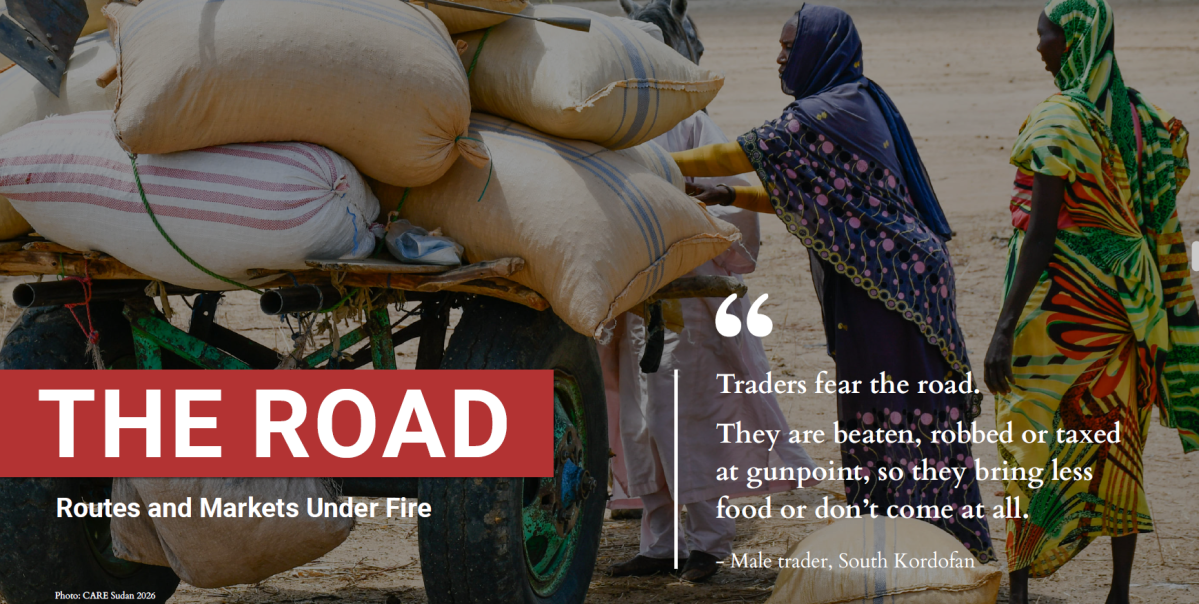
And what survives the farm often struggles to survive the road. Checkpoints, taxation, insecurity, damaged infrastructure and siege tactics continue to disrupt markets and restrict the movement of people, goods and humanitarian assistance. When roads, bridges, water systems, power stations, fuel depots and markets come under attack, food becomes harder to produce, transport and afford.
Every crop that cannot be harvested, stored, transported, sold or eaten is a missed opportunity to prevent hunger.
Women and children are carrying the heaviest burden
Mothers routinely skip meals so children can eat. Female-headed households remain roughly three times more likely to be food-insecure. Families facing impossible choices are withdrawing their children from school and resorting to harmful coping mechanisms, including child labor and early marriage. Women face heightened insecurity and violence, including systematic gender-based violence, and feel unsafe simply going to the market, collecting water or gathering firewood.
Yet women are also central to the solution. In these times of war, women are Sudan’s farmers, traders, agricultural labourers and household economic decision-makers. Protecting their access to land, markets, finance and security is essential to protecting the harvest itself.
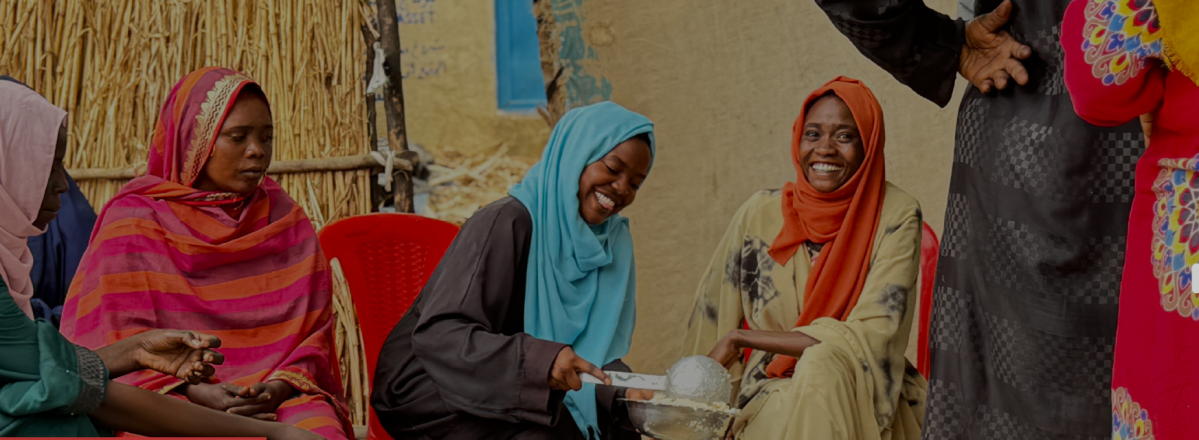
Photo: Ahmed Ahmed / NRC
Communities are keeping Sudan’s food system alive
Despite immense pressure, Sudan’s food system has not collapsed completely, because Sudanese communities refuse to let it. Farmers’ associations, women’s savings groups, local responders, community kitchens, and local traders, transporters and agro-dealers continue to keep food moving under some of the most difficult conditions imaginable. Most operate with little funding and under constant threat of detention and violence.
These networks are keeping local economies functioning and people alive. But the pressure is growing. Families report surviving on fewer meals, selling what little they own, and exhausting every available coping mechanism. Child malnutrition is rising, while access constraints continue to prevent a full understanding of hunger conditions in some of the areas at greatest risk.
Hunger is avoidable if obligations are upheld
All of these outcomes have been predicted. And all can be prevented if the law is upheld.
The right to adequate food is protected under international law. In armed conflict, parties are obligated to protect civilians and civilian objects and to facilitate humanitarian assistance. International humanitarian law also prohibits the use of starvation as a method of warfare and requires the protection of objects indispensable to civilian survival, including farmland, livestock, markets, water systems, food production assets and supply routes.
These rights and obligations are reflected in the Geneva Conventions and other core instruments of international humanitarian law. Conflict parties are obligated to respect these obligations, and third states must ensure this respect. These obligations have been repeatedly reaffirmed through UN Security Council Resolutions 2417, 2573, 2736, as well as through numerous political commitments and diplomatic declarations.
In Sudan, the parties to the conflict also committed themselves through the Jeddah Declaration to protect civilians, civilian objects and humanitarian operations. However, those obligations and commitments are not being upheld and enforced.
What must happen now
Protecting the harvest means protecting the entire food system around it. Farmers, herders and agricultural workers must be able to safely reach their land, grazing areas and water sources. Farmers and traders must be able to reach markets. Food, commercial goods and humanitarian assistance must be able to move freely and safely. And the Sudanese communities, local responders, women and women-led organisations, community groups, farmers' associations, market networks and livelihoods and climate-resilient systems needed to sustain food security beyond this harvest must be supported with protection, recognition and direct, quality funding. Above all, the conflict parties and the international community must act now, during this October - January harvest window, to secure the conditions that can prevent Sudan’s food crisis from worsening in 2027.
The following actions can still be taken during this harvest season to help prevent a deeper hunger crisis in 2027.
Conflict parties, their affiliated forces and external supporters must:
● Agree and implement an immediate cessation of hostilities and pursue genuine efforts towards a negotiated resolution of the conflict, with meaningful civilian participation.
● Protect Sudan’s food systems and harvest, including by ensuring safe access to farmland, grazing areas, water source and markets, and ending all attacks on civilians and civilian infrastructure, including agricultural assets, livestock markets, water systems, power infrastructure and other assets essential to civilian survival.
● Guarantee unhindered civilian, commercial and humanitarian movement, including lifting siege-like conditions, facilitating full, rapid, safe, predictable and unhindered humanitarian access across conflict lines and borders, keeping key trade routes open and removing unlawful or excessive taxes, fees and other restrictions that impede the movement of food, agricultural inputs and aid.
Regional and international actors must:
● Make protection of the October-January harvest an urgent and time-bound diplomatic priority, securing concrete commitments from conflict parties on protection of civilians, safe movement, protection of food systems and humanitarian access.
● Use all diplomatic and political leverage to ensure compliance with IHL obligations, the Jeddah Declaration and existing commitments relating to protection of civilians, humanitarian access and the right to food.
● Demand an immediate halt to attacks targeting civilians and civilian infrastructure, including markets and health facilities, and support practical measures to protect civilian sites, including “no-strike” arrangements.
Donors and humanitarian actors must:
● Fully fund Sudan's 2026 humanitarian response plan and sustain support through the 2027 lean season. This must include an immediate and drastic increase in direct, quality funding with low administrative and compliance complexity to local responders, community-based organisations and women-led organizations.
● Pair life-saving assistance with recovery and resilience investments, including targeted support to women farmers and traders, producer groups and associations, humanitarian mine action, climate-resilient agriculture, livelihood recovery and other measures that restore production, processing, keep food moving, protect markets and ensure safe access to food.
Protecting this harvest may not end Sudan's hunger crisis on its own, but losing it will make next year's crisis far worse. Every week of inaction narrows the opportunity to prevent deeper hunger, acute malnutrition and further displacement in 2027.
Sudan cannot afford to lose another harvest.

