
A Continuum of Support for Mother and Baby: Safe Delivery & Newborn Care
For Youssra, a Syrian refugee living in the Bekaa Valley, preparing for her baby's birth meant thinking not only about motherhood, but also about how to keep her family going. Years of displacement and financial vulnerability had left her family struggling to access essential services and meet daily needs. Her husband has been unable to work since sustaining a disability in a work-related accident two years ago. With no health insurance or other financial support, Youssra continued working throughout her pregnancy to help provide for her children and cover the family's basic needs.
When she contacted Action Against Hunger, an assessment confirmed the family's financial difficulties, with a vulnerability score above 70%. Through support from the Lebanon Humanitarian Fund (LHF), Action Against Hunger was able to cover the full cost of her maternal healthcare, including her delivery at President Elias Hrawi Governmental Hospital in Zahle.
For Youssra, this meant that the cost of giving birth no longer stood between her and the care she needed. But after her baby was born, a new concern emerged.
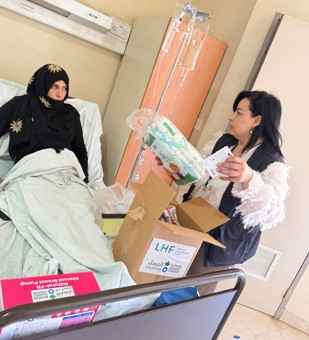
During a follow-up visit at the hospital, Youssra was told that her newborn might need admission to the Neonatal Intensive Care Unit (NICU) because of respiratory complications. As a refugee family already struggling with the economic impact of displacement, compounded by her husband’s disability and loss of income, the prospect of specialized neonatal care created significant anxiety. After receiving support to access maternal healthcare and delivery services, Youssra was suddenly confronted with the possibility of another unaffordable medical expense. With limited financial resources and no health insurance, she feared she would be unable to secure the lifesaving care her baby might need.
The Action Against Hunger team explained that the LHF-funded project at Zahle Governmental Hospital could provide coverage for NICU care for eligible cases. Shortly afterwards, the newborn's condition required admission to the NICU, and the case was referred to Action Against Hunger.
The project covered the full cost of the baby's hospitalization, allowing the newborn to receive specialized medical care without adding another unaffordable expense to the family's already difficult circumstances.
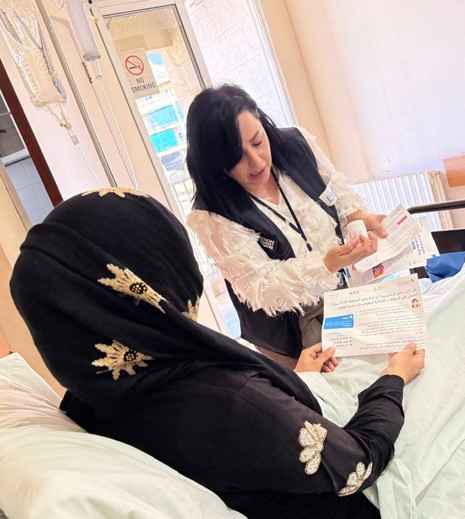
For Youssra, the support also took another form. While her baby remained in the NICU, she faced the challenge of maintaining breastfeeding while being temporarily unable to breastfeed directly. Action Against Hunger provided vitamins and nutritional supplements, as well as a breast pump, and supported her with practical counselling on breast milk expression and pumping techniques.
This enabled Youssra to continue expressing breast milk during her baby's hospitalization, maintaining an important connection between mother and newborn while her baby received specialized care. Youssra's experience highlights how humanitarian crises can intensify the challenges families face around childbirth, with financial hardship and limited access to healthcare placing mothers and newborns at greater risk. While she was initially supported to access safe delivery services, her baby's unexpected need for specialized neonatal care created a new and urgent challenge. Through support from the Lebanon Humanitarian Fund (LHF), Youssra and her newborn were able to access the continuum of care they needed, from maternal healthcare and safe delivery to lifesaving neonatal treatment and breastfeeding support.
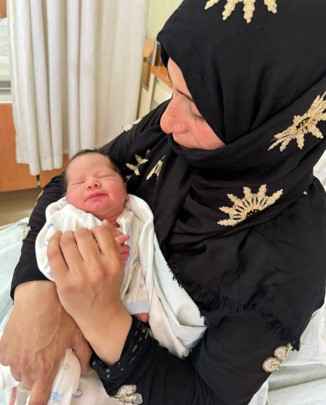
The project covered the cost of her delivery and her baby’s NICU treatment, while also providing nutritional supplements, a breast pump, and breastfeeding counselling. By addressing critical healthcare and nutritional needs at different stages of the maternal and newborn journey, the intervention helped ensure that Youssra and her baby could access the appropriate care and support when they needed it most.
“Thank you very much for Action Against Hunger. They saved my life and my son's life,” said Youssra.
Youssra’s story demonstrates how crises can disrupt access to essential healthcare for mothers and newborns during the critical period around childbirth. Displacement, financial hardship, loss of livelihoods, and limited access to health coverage can create significant barriers to obtaining timely maternal and neonatal care, even when medical needs are urgent. By connecting access to maternal healthcare, advanced newborn care, and breastfeeding support, the intervention helped overcome these barriers, ensuring that both mother and baby received the care they needed despite the challenges created by the humanitarian crisis.
