
Bringing Healthcare Closer to Home: How Hweir Al-Eis Is Rebuilding Access to Essential Care
For years, families living in Hweir Al-Eis and surrounding villages in southern Aleppo faced a difficult choice when they needed healthcare: travel long distances to find it, or risk delaying care.
The rural area had limited health infrastructure and no functioning medical facility providing the range of essential services communities needed. Women and children were particularly affected. Families often had to travel to Aleppo City or Al-Zerba for vaccinations and other basic healthcare, while for patients experiencing a medical emergency, the distance could become a matter of life and death.
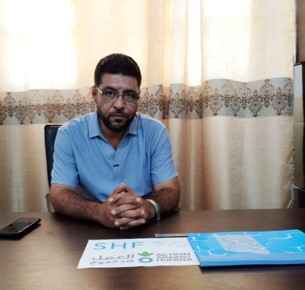
For Shadi Al-Jassem, Manager of Hweir Al-Eis Primary Healthcare Center and a long-time resident of the area, these challenges were not abstract. Through his work at the centre and his daily contact with patients and families, he witnessed both the difficulties communities faced when healthcare was out of reach and the difference that having services available locally could make.
“Before the center became operational, many families had to travel long distances just to access basic healthcare services,” Shadi explains. “Today, people can receive care close to their homes, which has made a real difference in their lives.”
That access began to change on 1 May 2026, when Action Against Hunger, through funding from the Syria Humanitarian Fund (SHF), took over the operation of Hweir Al-Eis Primary Healthcare Center.
The centre now provides a comprehensive package of primary healthcare services, including general consultations, reproductive health services, child healthcare, nutrition services, vaccination, health education, Infant and Young Child Feeding support, and pharmacy services.
Today, the centre serves approximately 15,000 people in Hweir Al-Eis and surrounding villages, bringing essential healthcare closer to families who previously had to travel outside their communities for many routine and emergency services.
Sometimes, the difference is measured in kilometres. Sometimes, it is measured in minutes.
Shadi recalls the case of a patient who suffered a severe allergic reaction after being stung by a bee. The medical team was able to provide immediate treatment at the centre, preventing the reaction from progressing to life-threatening anaphylactic shock.
The nearest alternative health facility is approximately 35 kilometres away.
“One of the most rewarding moments is seeing patients receive timely treatment that can prevent serious complications,” Shadi says. “Having these services available locally saves both time and lives.”
The centre is also helping restore preventive healthcare that families previously struggled to access. During its first four months of operation, its mobile vaccination team vaccinated 120 children, helping protect them against vaccine-preventable diseases.
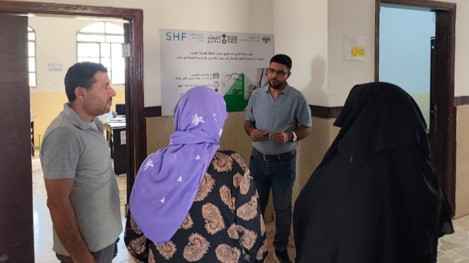
Between May and July 2026 alone, 5,698 people accessed primary healthcare services through the centre.
But for Shadi, the significance of the centre extends beyond consultations, medicines and vaccinations. Having healthcare available locally can also influence whether families feel able to remain in their communities or return to them.
“The center has not only improved access to healthcare, but it has also given people a greater sense of security and encouraged families to stay in or return to the area,” he says.
The significance of the centre therefore goes beyond restoring a health facility. It is about re-establishing a service that communities depend on to manage illness, prevent disease and respond to emergencies before they become more serious.
Support from the Syria Humanitarian Fund has enabled Action Against Hunger to maintain qualified healthcare staff, provide essential medicines and a comprehensive package of primary healthcare services in an area where access had previously been limited. For thousands of people, this has transformed healthcare from a distant and difficult-to-reach service into one available closer to home.
Progress, however, does not mean that the need has disappeared. For Shadi, maintaining reliable healthcare in the area will require continued support, adequate medical supplies and, where possible, an expansion of the services available to the community.
He hopes that the centre will continue to develop so that families can access a wider range of quality healthcare services without having to leave their communities. For an area where distance once stood between people and essential care, keeping those services available is an important part of sustaining recovery.
For families in Hweir Al-Eis and surrounding villages, the centre has brought essential care closer to home, available when needed, and is becoming part of the community's path towards recovery.
