
After Safe Delivery, a New Crisis Began: Protecting a Mother and Her Newborn Through Displacement in South Lebanon
During her pregnancy, Zahraa required specialized medical care. As conflict intensified in South Lebanon and the risk of displacement grew, accessing essential healthcare became increasingly challenging for affected families. Through a routine community screening in Tyre district, Action Against Hunger teams identified complications that placed her pregnancy at higher risk and connected her with appropriate care and follow-up. With funding from the Lebanon Humanitarian Fund (LHF), the costs of her delivery at Jabal Amel Hospital in Tyre were covered, ensuring that she could access safe and timely maternal healthcare despite the challenges created by the conflict.
After her baby was born, Zahraa received a newborn kit with essential supplies and breastfeeding counselling to support the early stages of her child’s life. But weeks after Zahraa gave birth to her newborn, conflict escalated across South Lebanon. She faced a new challenge: leaving her home and caring for her baby in a collective shelter away from everything familiar. The stress, uncertainty, and disruption of life in a collective shelter affected Zahraa’s ability to continue breastfeeding. At a time when newborns are especially dependent on consistent nutrition and care, she needed additional support.
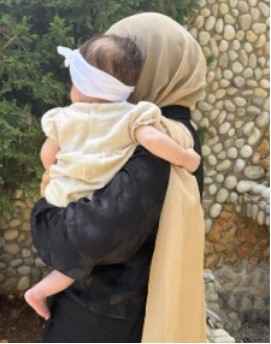
An Infant and Young Child Feeding in Emergencies (IYCF-E) Specialist reached Zahraa at the shelter and provided individual breastfeeding counselling to help her overcome these challenges. She also received micronutrients and dietary supplements to support her recovery after childbirth.
Despite displacement, Zahraa’s baby continued to receive essential healthcare through a satellite primary healthcare unit supported by Action Against Hunger, including medical follow-up and routine vaccinations.
Following agreements, when the conflict entered a period of relative calm, Zahraa and her family returned to their home in the South. While the house was not destroyed, it sustained damage, including broken windows and other repairs that the family now needs to address. Nearby strikes also affected the area and caused further damage to the property. Although they were able to return, the effects of the crisis remain present. Ongoing hostilities and insecurity continue to affect communities across parts of southern Lebanon, leaving many families concerned about their safety and uncertain about the future. Returning home does not erase the impact of displacement, and families continue to face the challenges of repairing damaged homes, restoring their livelihoods, and maintaining access to essential services while navigating an unstable environment.
For Zahraa and her baby, continued follow-up has helped maintain the care they need through pregnancy, displacement, and recovery. Her story reflects the importance of humanitarian responses that remain connected to people’s changing needs, even as crises evolve.
